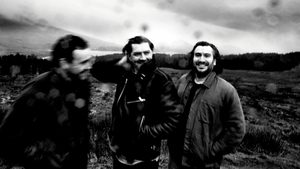
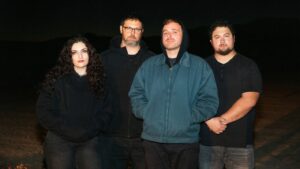
No matter what Movements are up to, Patrick Miranda will always learn something from the process.
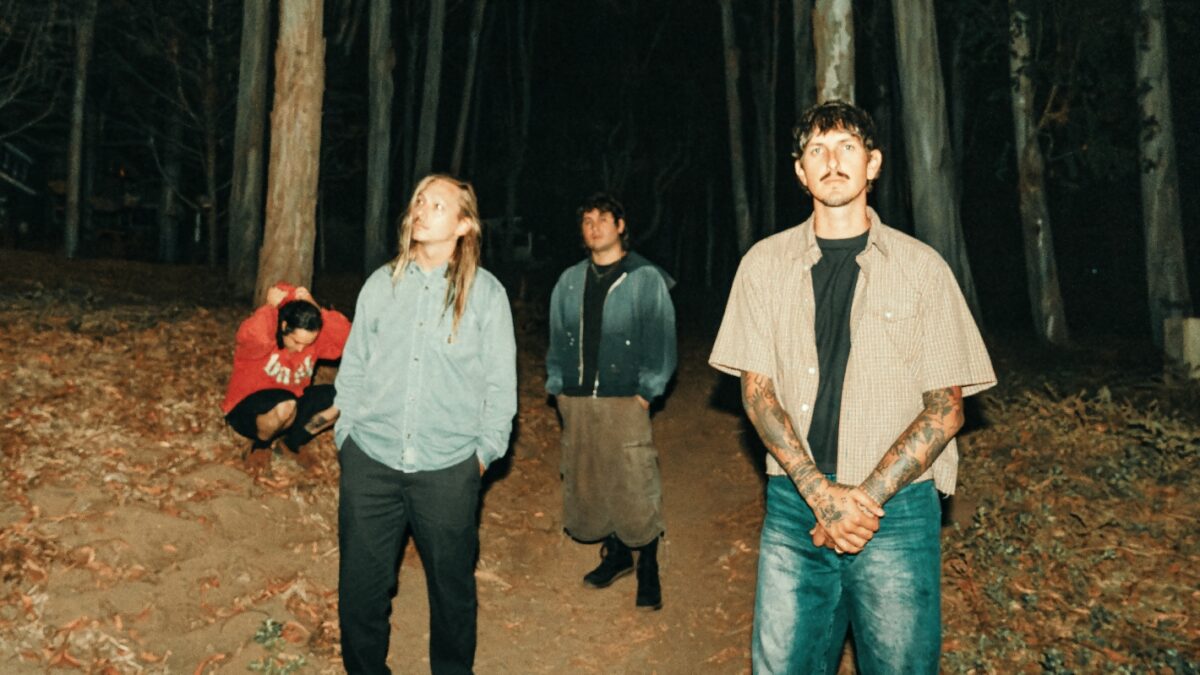
The last decade has seen them become one of the consistently brilliant and emotionally expressive bands that the scene has at its disposal. Pushing and pulling at what defines them whilst also sharing the deepest and darkest of feelings as a means of showing those listening they aren’t alone in their struggles, it has meant that eyes, ears and souls from all angles and walks of life have discovered the quartet.
And when it came to approaching their fourth full-length, it felt like bringing all of those different versions of themselves together was the right thing to do. The result, ‘Happier Now’, is all the better for it too. Spine-tinglingly beautiful, expressive as it is intense and brimming with heart and hurt at every turn, it is the best of the band and then some.
It’s also a heavy listen, which, for Patrick, was a surprising turn. But because of the journey that they have been on, he was much better prepared for what was unfurling before him.
To find out more about what went into it, Rock Sound sat down with Pat for a catch-up.
Rock Sound: How do you feel as though what ‘Happier Now’ became started? What do you feel like the intentions earlier on were?
Patrick: When we went into the writing process for this album, we wanted to find a way to bridge the gap between fans of the new stuff and fans who were only fans of the old stuff. There is a huge middle ground there, where there have always been people who’ve loved every iteration of what Movements is and has been. But I think this last record that we put out, ‘Ruckus!’, was pretty polarising for a significant amount of our fan base. It wasn’t some people’s thing, but it was a lot of people’s thing, too, and that’s really cool. And that was intentional. The whole plan with ‘Ruckus!’ was that we were coming out of the pandemic, and coming off of a record that didn’t really get to shine because of the pandemic, and it was us needing to be like, ‘How do we get people talking again? How do we get people excited?’ That’s why we wanted ‘Ruckus!’ to be so different, and I think we succeeded in that.
But we’re also understanding of the fact that there is like an “expectation”, and I put them in air quotes because I don’t think that there should be an expectation for what any band should sound like or needs to sound like, especially not movements. At the end of the day, we always just write whatever the fuck we want, whatever we feel good about, whatever is making us feel fulfilled, and we’ll continue to do that. But we also understand that a lot of people fell in love with this band for a specific feeling and a specific vibe, and we don’t want to abandon that completely. That is part of what got us here. So, how can we bridge that gap and make this feel like a natural progression into this next era of whatever Movements is going to be? And we didn’t even know the answer to that question.
I think where we really thrived was bringing the energy of ‘Ruckus!’ and the emotionality of earlier Movements, and blending the two, which really solidified what this record was going to be. Once we figured that out, we could then just fucking rock and just see what comes.
RS: Where do you feel as though that emotionality was coming from?
Patrick:I have been in a place over the last few years, from the time that ‘Ruckus!’ came out until when we were writing this album, even up until now, in which I had gone through some upsetting shit. Life hasn’t been completely awesome for me for the last couple of years. And that’s life. That’s being human. And so I had, I guess, less positive things to write about, and a lot of the darker side of things that I could write about.
I wasn’t expecting for every song to be that way, but it was eye-opening for me because I was like, ‘Shit, I guess I’m kind of dealing with a lot more than I have been putting on’, or at least that I was allowing myself to work through. And that was the moment of realisation for me, where I was like, ‘Alright, am I really as happy as I’ve been saying that I am?’ I’m in a better place mentally and emotionally than I used to be, and I was under the impression that I was doing a lot better and was happier in life. Coming to find out through my own therapeutic process of writing that maybe I’m not as happy as I thought I was is why it felt like the perfect idea for the name ‘Happier Now’. It’s a statement, but it’s also a question. It’s tongue-in-cheek because people expect that when you hear something being called ‘Happier Now’, it’s going to be happy-go-lucky, and it’s just the opposite. It was very intentional. Like, are we really happier now?
RS: Though when you find yourself returning to these places, it must be a relief when you realise how many tools you now have to deal with them as a songwriter, thanks to what you have already done with Movements? It’s a very different way of approaching the heaviness than you will have had to back when you were making ‘Feel Something’, for example.
Patrick: Absolutely, man. I look back at earlier versions of myself and our old songs, just where we started and how this all began versus where I am now, a lot. And I’ve been extremely open about my mental health struggles and how I believe that it’s always going to be ups and downs. Nothing’s ever linear. It’s not just going to be, “Someday you get better.” It’s constantly a back and forth. And I was in these really, really dark, negative places before, and I have developed tools, and I have grown a lot from who I was back then. And I’ve matured as a person, and I truly feel like I’ve grown up; oftentimes I look back at who I used to be, and I don’t even recognise that person.
I’m absolutely in a better place now than I used to be. But there will always be those struggles. Something new will always come up. But I’m able to deal with it better now, and I am still going to be honest about how I’m feeling and put that into our music. I think that’s important. It’s extremely cathartic for me to have my therapy that way.
There will be times in the future when I’m feeling much better, and I’ll write happier songs or love songs or whatever. And then there will continue to be times in our future when I write sad stuff and dark things. Ultimately, I’m just thankful people care enough to listen, connect, and feel like we’re all part of something bigger than ourselves.
RS: And saying that, it’s not like Movements have ever strayed away from that emotional outpouring. ‘No Good Left To Give’ and ‘Ruckus!’ aren’t exactly chipper, are they?
Patrick: Yeah, I feel arguably ‘No Good Left To Give’ is our darkest. I think it’s the saddest one there is, which is funny because I think a lot of people were like, ‘Oh well, we wanted ‘Feel Something Two’. I didn’t think it was that different than ‘Feel Something’.
How do you feel as though writing in this manner, especially on ‘Happier Now’, has affected how you deal with things in your day-to-day away from the band?
Patrick: I think everything that we have been through as a band, everything that I’ve been through personally – my social life, my relationships – has all got me to where I am right now and where we are right now as a band. I’m obviously extremely appreciative of everything I have gone through, and how even the struggles and the shit have ended up helping me grow as a person and given me a better outlook and understanding of what I want from life and what I want from music.
As I enter this next decade of my life, I just turned 31, and I’m not the kid I used to be. I’ve been making this shit since I was 18 years old, so it’s interesting to see the change and to see what the projections for our future are now and how we can continue to grow into something that we didn’t think it was going to be before. We’re already there. This is already worlds beyond anything that we thought we’d ever accomplish as a band, and it’s all we have. So where do we go from here, and how do we keep making that our reality? I feel like the door is more open than it’s ever been for us and maybe for music in general. Music is more easily accessible than it ever has been, and that’s a win for us, and we get to try and capitalise on it, and see where we continue from here.
RS: Saying all of that, it’s a wonderful time to feel completely at ease with yourself and what you are doing as a rock band right now. And for Movements to be where they are now, making the music that they are, it feels like absolutely anything is possible.
Patrick: We’re always going to stay true to those roots that we have. And I think there’s a new nostalgia happening where these young ass kids are being exposed to what Warped Tour was when they were infants, or when they were not even alive, and now they are all coming in and getting to experience that and be a part of it. There’s been a revival of the scene a little bit because you’ve got all these teenagers coming in and just kicking shit up again, which has been really cool to see. We’ll obviously always stay true to that. We’ll always own the fact that we are Warped Tour kids and we are hardcore kids, and we’re at a time where these subcultures can transcend even themselves. I love bands like Turnstile, who have gone from being the coolest band in the scene, and a fucking hardcore band, to being the biggest band in the world but still being that hardcore band at the end of the day. And that, in itself, exposes kids to this world of music. It’s a cycle where everything helps each other out in the right ways.
I think rock music is really making a comeback, and we want to be part of that, keep growing this band, and see what happens. And there are a lot of what-ifs. Like, what if we could do this? What if we could do that? Is Movements ever going to be the type of band that could win a Grammy as Turnstile did? Is Movements ever going to be the type of band that’s going to sell out stadiums? And who knows? The answer to those questions is still very much up in the air. But I think right now we’re in the best position we’ve been in so far in our career to accomplish those things. At the end of the day, we’re completely satisfied with where we are, and we’re so happy we’ve made it this far. We want to continue pushing, growing, and seeing what is possible for a band like ours.