There is a world out there where Alex Biro would never have dreamt of returning to Selfish Things. But that world isn’t this one.
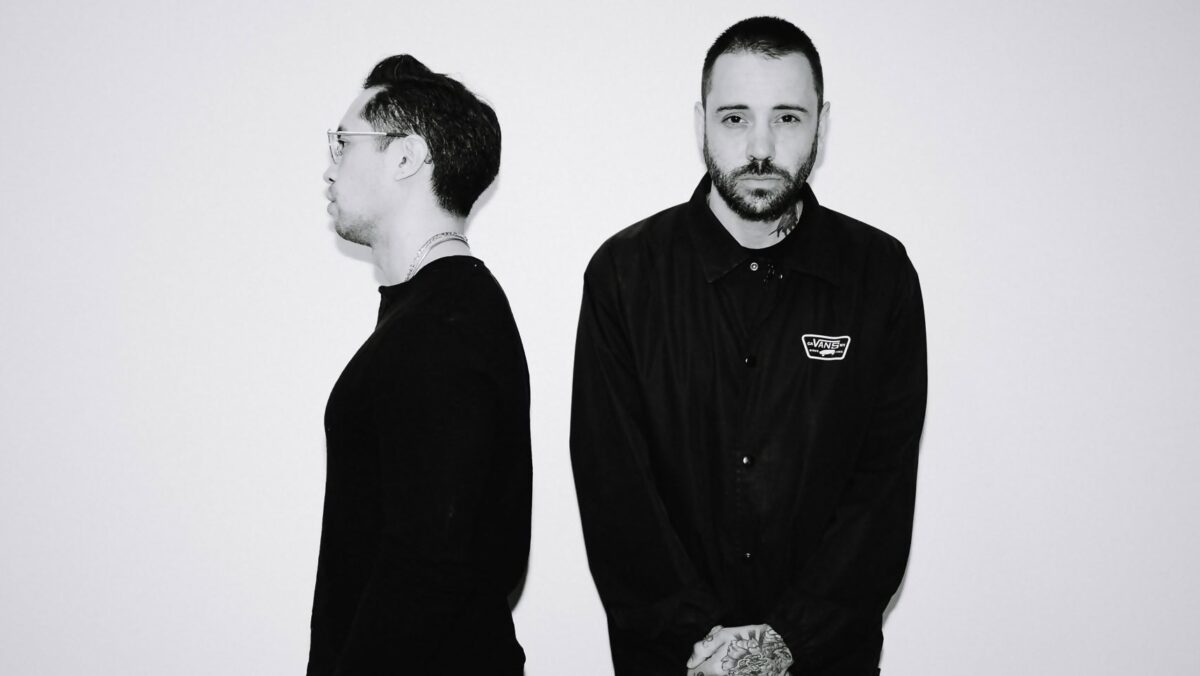
Since the release of their sensational debut ‘Logos’ back in 2019, Alex has been to the brink and back in a way so many of us could never even imagine. Now, coming up to four years of sobriety, his place in the world is very different to that of which he spent circumnavigating, and ultimately being eaten alive, by the music industry.
Now working as a mental health coach for musicians and managing a slew of artists he believes in, he’s also chosen to make music as Selfish Things once more and give this period of his life a real ending.
The result is ‘Receptivity’, a volatile and rather discomforting record, but one that is utterly vital at the same time. A warts-and-all look at what it means to be in the pits of addiction, and what it means to take accountability for the actions he took while in those pits; it’s a record Alex didn’t have to make, but the fact he did is a gift.
After playing what he sees as a final show as Selfish Things, one last performance to close this chapter, to coincide with the record’s release, Rock Sound chats with Alex about what he learned from this life-changing period.
Rock Sound: What do you feel was the real catalyst for you wanting to return to Selfish Things in this way? Because, honestly, you didn’t need to, but something was clearly driving you back to it.
Alex: The truth of it was that six months into my sobriety in 2022, I was experiencing what I refer to as rational suicidality. You have your addiction suicidality and your dysregulated suicidality. Still, then once you wake up to, I was the cause of all of my problems, ‘ it’s a different level of heavy when you’ve blown a hole and everything.
So [Mike] Ticar, who plays in Selfish Things, and Tompa, who I manage and who’s one of my best friends, showed up at my parents’ house one weekend, and they were like, ‘You just need to write, and like you need to get it out.’ And in that weekend, ‘Effigy’ and ‘Sunlight’ both happened. Then for a while, we were sitting on like 60 demos of just things we’d made, whilst I was manoeuvring through school and trying to understand myself and trying to gain a new perspective into my relationship with what I perceive to be God and nature and all of those things.
Then after a series of events and seeing people who didn’t get out of addiction pass away, I felt it was a spiritual obligation to stand on my own two feet as a sober person who’s doing their best to heal and be accountable. That realm of Selfish Things was driven by my earlier experience with my first band, which Scooter Braun managed. You make plans, and God laughs, right? But I really wanted to be somebody so desperately that, in wanting to be somebody, I became a version of myself I should never have been.
And now, doing the work we do on tour and doing the research that we do, and seeing how deeply wounded people who are on tour are – it’s a 7% clinical depression rate in the normative population, but 35% on tour. The only comparable data is combat veterans. So, in learning how damaging that lifestyle can be, I wanted to come back and stand on my own two feet, for myself and for the fans who had been waiting in the ether.
How do you reflect on the person you were during the first go-around with Selfish Things, and how do you compare that to who you are now? Every choice is very much yours now, but back then, it must have felt very different.
Alex: I think it’s a lot about the industry that I came up in. I was a studio intern in 2011, when The Weeknd was recording part of ‘House of Balloons’. My mentor, my first mentor in music, was a co-producer on ‘High For This’, and then we got shipped off to Los Angeles, and I think I learned a very aggressive, wooden-headed, and unhealthy way to operate in art and business. I think the biggest part of it is the automation of touring. You put out an album, but now 18 months from now they need another one, and you have these two tours coming up, but they’re going to want a third one. And when you’re on tour, you so desperately want to go home, and then when you get home, you so desperately want to be on tour.
And it got to the point that, on the last tour, I was driving to the van, and I was thinking about ways to, like, crash my car into the median without hurting someone, so I could not do the tour. In reflection, that level of human desperation indicates a lot of suffering and pain. I have a lot of grace and empathy for that version of myself because I recognise the depth of that pain. As a man in recovery, my failures were in accountability as an action, and in not recognising that accountability can’t just be putting your emotions into words and making sounds.
And when it comes to this project, we’ve just played the final Selfish Things and then whatever happens after that, if I ever do another project or write differently, I feel like this was the last body of work creatively that fit the mould of that project. So wherever I land, whilst turning the lights off, it feels empowering in one way not to feel beholden to anybody or to this industry. But I had to go through a furnace, or several furnaces, to really land there.
RS: A lot of that really does come through in your songwriting on this album. It feels quite uncomfortable, how clearly you felt you were at the bottom of the barrel, looking up. That can be a scary place to write from, especially when you are in recovery from those situations. But how do you feel your relationship with these situations shifted as they went from ideas to fully fleshed-out songs?
Alex: It’s funny because you invoke a very valid point about the pain and the suffering that’s very self-evident in a lot of the lyrics. And this may sound odd, and probably the reason I’m a little bit zany, but I don’t listen to it and hurt. I don’t sing it when we’ve been rehearsing it for the show and feel pain. I think it’s more like radical acceptance. What this album gave to me, and my two best friends, was something for all of us to look at, and it feels deeply meaningful and special to us because it was a process of healing myself, becoming accountable, sober coaching, and all of that stuff. They have seen me go from a full-blown raging benzo and alcohol addict to somebody being of service to his community and standing on two feet who was actionable.
So I feel deep gratitude to be able to put this out because, in the last 16 months, I’ve lost three very close friends. One to overdose, one to suicide, and one tragically. And when you try to do the math as an addict of, ”Okay, well, I technically should have died, but I’m still here”, it sounds cheesy and heady, but I can’t approach this with anything other than a deep thankfulness. The DMs I’ve gotten from fans who have said, ‘This has helped me contextualise this’ and ‘You saved my life back then’. Things I could never have imagined. The roots of this one run very deep, and it comes from a well of acceptance and faith.
My mum and dad can’t listen to it, though. They love it, but one listen was enough.
RS: It’s very easy to hide away from these things. Put them in a box, never touch them, and pretend it’s a different life. But paying tribute to the progress you have made, and the way you know you are living life differently now, is just as important as any other part of making art.
Alex: To be clear, I was terrified. I still am terrified of all of it, and I think two opposing truths exist at once. One truth is real gratitude, and the other is grief. I feel like the only actionable way to move through grief, because one of the losses was deeply embedded in the community that helped me out of my home in Toronto, was to ask, ‘How do you actually live a life of honour, and what do you value?’ And the way I’ve learned to move through this hyper exposure to grief is to do your best because those you loved are no longer here.
I was driving back from the golf course with a close friend who passed away from an overdose, and we were listening to these songs last year before they came out. He was such an advocate of my healing in a very direct way. It would be dishonourable of me as a human being not to honour at least that little fraction of my life to make sure that I can go like, ‘Hey man, wherever the fuck you are in the ether, I’m going to stand on my own two feet, and we’re gonna put this out’.
We need to take action every day to repair and improve the relationships in our lives. And accountability is a real thing. It doesn’t take away the pain I bestowed upon others during my addiction. Still, we need to remember that, like, we’re 8 billion broken people and like, if I put a GoPro on every single motherfucker in the room, within a week, everyone will have done something. The groundedness I feel in this record, and in my life despite the challenges I still face, comes from a real belief that you can redeem yourself.
RS: Especially when you have found footing in the alternative scene, and when the music you are making is rooted in alternative and emo. It’s a way to make sure the 16-year-old version of yourself who found solace in these sounds is accounted for, too.
Alex: I think people really forget that we all start in our bedrooms or our basements with a guitar. Then you play a show to 30 people, and then 60 would show up to the next one, and then 150, and then you get an agent, and then all of a sudden, like you’re validated in your brokenness. Everything you hate about yourself is now tied to how you make money.
I don’t expect human beings at all to understand what the 1% of people who actually get to go on tour go through. If you look at an environment where you’re validated economically, socially, and publicly for your brokenness, and people are drawn to your art for that brokenness, I’d really love people to consider approaching the people who purely make art.
RS: With this album out now, and Selfish Things as a project down tools, what part of all this, musically and emotionally, has given you the most contentment?
Alex: This answer has two parts. Part one is that I have a deep gratitude for the contentment that comes from just the basic DMs of strangers telling me stories I don’t remember that obviously touched them deeply and meant something to them. But then there is the contentment of being 1600-plus days sober and feeling like what I’m actually saying to people and what I’m saying in this album is a reflection of reality and the truth. I think it’s like the purest and most direct confrontation that I’ve ever had out loud.
And the second part of it is a bit of a mixture of the way my worlds have collided. Between being sober coaching and being a mental health practitioner and doing this album and doing management, this weird coagulation has led me here to this place of my own self-reflection and realising that I very much believe that nobody is irredeemable and there’s a reason I want to work with the sickest of the sick. Through my experience in the world, I can separate my judgment and understand that judgment belongs to something I believe is bigger than all of us. My ability to help someone bring themselves to a place of accountability and understanding is the best way I can continue to heal the world.