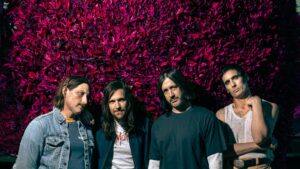
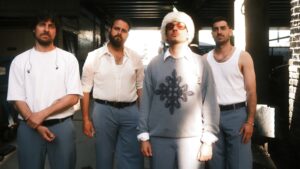
If the notion of a rule book ever existed in the minds of SiM, it was confidently torn to shreds shortly after their formation back in 2004.
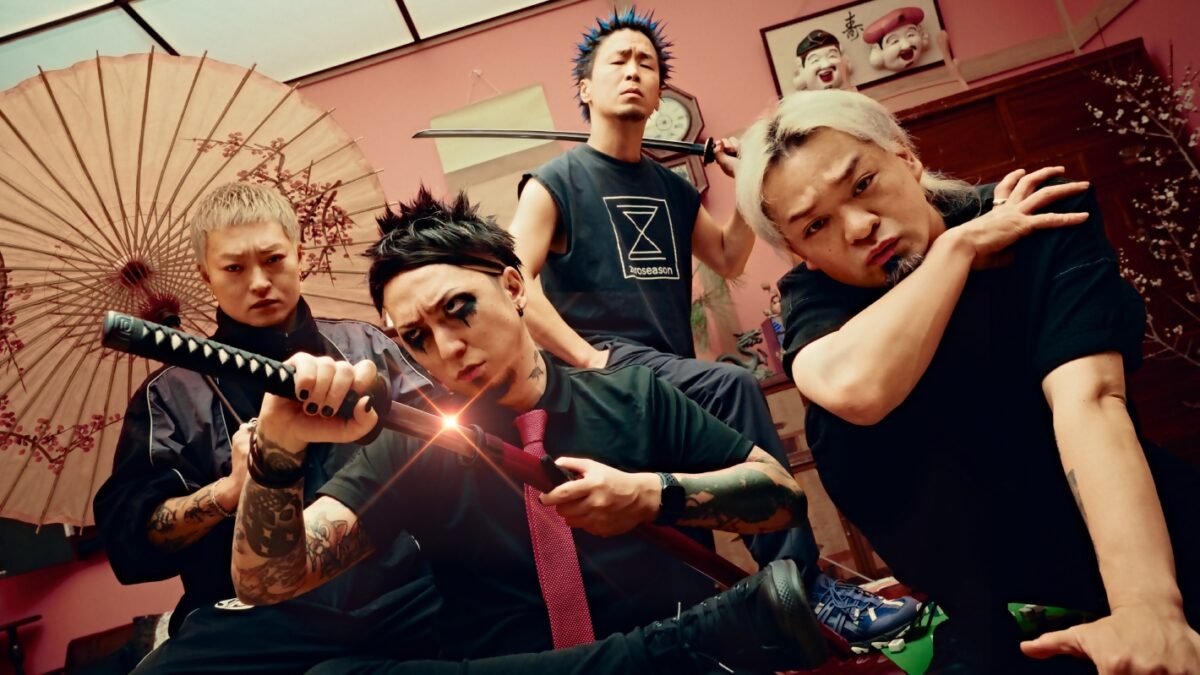
Emerging from the Japanese prefecture of Kanagawa over two decades ago, the four-piece have spent over two decades colliding metal, hardcore, punk, ska and reggae with anything and everything else that’s taken their fancy along the way. Creating one of the most singular sounds in the scene, bold, exciting, and totally unpredictable, their pursuit of exploration in the most volatile of forms has carried them from sold-out Japanese arenas to festival stages across the globe, bringing them to the pivotal point they’ve now reached.
That brings us to the band’s seventh full-length ‘HOOMAN AFTER ALL’, which finds them looking backwards in order to move forwards. Inspired by the late-’90s and early-2000s generations of rock that first shaped vocalist MAH, guitarist SHOW-HATE, bassist SiN and drummer GODRi, it’s a record fuelled by nostalgia without becoming beholden to it, taking everything encoded into their musical DNA and mutating it into something distinctly their own.
To celebrate the album’s arrival, Rock Sound caught up with MAH to talk about what’s changed coming into this fresh era, the community that has kept SiM alive this long, and how he’s finally learning to embrace the person he has become.
ROCK SOUND: You’ve described your new album ‘HOOMAN AFTER ALL’ as a tribute to the era of rock that existed through the late ’90s and early 2000s. What was it about that era that you were drawn to and particularly wanted to capture?
MAH: “The mainstream is flooded with auto-tune, ridiculously overdone low end, and monotonous beats. Even metal and hardcore feel oversaturated with bulldozer-like breakdowns and increasingly complicated time signatures. Personally, I’m just tired of all that. I also believe that music scenes move in cycles of about 25 years. So, I have a feeling the kind of scene I grew up with as a teenager is about to explode again very soon. I’ve been waiting more than 20 years for this moment!”
RS: It’s important that you’re able to pay tribute to that sound without just copying it, too. How did you approach turning that nostalgia into something that still felt fresh and had that distinct SiM sound?
MAH: “The music we grew up listening to is basically encoded into our DNA at this point. What we do is take that DNA and mix it with whatever sounds fresh and exciting to us right now, but in combinations and proportions that nobody else has tried before. It’s kind of like Jurassic World. They weren’t satisfied with just bringing dinosaurs back to life, so they created the Indominus Rex instead. That’s basically what we’re doing.”
RS: As a band, you’ve always enjoyed challenging yourselves by merging all different sounds, from reggae and ska to punk, hardcore and metal. After more than 20 years, did making this album remind you that there are still completely new combinations for SiM to discover?
MAH: “One of the biggest challenges on this album was actually using brighter, more uplifting sounds. Sometimes it comes through the chords, sometimes through the melodies. That’s something we’d deliberately avoided in the past. We always tried to keep everything within scales and sounds that felt dark or sad. But this time, I just thought, ‘Why do we even need that rule anymore?’ Once we let go of it, we ended up with songs like ‘DALALA’, which has this really bright, positive energy. And then I’m singing ‘Frisbee a scythe!’ over it, which somehow makes the whole thing sound even more psycho.”
RS: For the first time in SiM’s history, you brought an outside producer into the process with Jon Lundin. After being so self-reliant creatively for so long, what did you learn from having someone new involved?
MAH: “Reaching our 20th anniversary was a big part of it. We felt like we’d already explored pretty much everything we could do entirely on our own, so we became curious about what would happen if we took everything we’d built over those 20 years and put it through the hands of people working at the cutting edge of modern music production. That wasn’t just Jon, but Joseph McQueen as well. In the past, we were heavily involved in every detail of the mixing process, but this time we basically handed it over to Joseph and said, ‘Let’s see what you do with it.’ They both did an incredible job. The musical DNA is still completely SiM, but they knew exactly how to bring out our strengths and cut away the things we didn’t need. I think that outside perspective was exactly what we needed after 20 years.”
RS: You also spent some time in Los Angeles doing songwriting sessions and working with people outside the band. Even though much of the album was eventually rewritten back in Japan, how did that experience affect the way you approached these songs?
MAH: “It was a really valuable experience. In the end, only two songs I worked on in LA actually made it onto the album, both of which I wrote with Morgoth Beatz from Seven Hours After Violet. But all the other creators I worked with were amazing too, and I got so many ideas from those sessions. The one thing they all had in common was freedom. In the best possible way, they didn’t really care whether an idea ‘sounded like SiM’ or fit what SiM had done before. If they thought something was cool, they just threw it into the pot and saw what happened. That sense of freedom really stuck with me. Later, when I went back and rewrote the songs myself, I kept reminding myself of that mindset throughout the whole process.”
RS: Where did the phrase ‘HOOMAN AFTER ALL’ come from? And what made you realise that it was the right title for this collection of songs?
MAH: “’HOOMAN AFTER ALL’ was actually the last song I wrote for the album. When I was writing the lyrics for the reggae part, I remembered watching a BBC documentary called ‘The Secret Life of the Cat’ years ago, and I thought it would be interesting to satirise the human world from a cat’s point of view. I wanted to use ‘hooman,’ the funny way animals supposedly refer to humans, in the chorus. Then at some point, Daft Punk’s ‘Human After All’ popped into my head. The moment I connected the two, I thought, ‘That’s perfect.’ I immediately knew it had to be the title track. It also perfectly reflects the way I think about life right now. There are so many things in this world that we can think and worry about forever and still never change. So, the question for me is, ‘Okay, then what are you going to do?’ We’re only human after all. We’re not gods.”
RS: There often seems to be a balance between anger and humour in SiM’s music. You can hear that in ‘BLiNDEYES’, which begins with that real feeling of frustration, but has a whole other side to it once HANABIE comes in. How important is it for you to have those humorous and theatrical moments in your music, especially when you’re dealing with dark subjects?
MAH: “One thing I always keep in mind is that the guy giving you the middle finger with a grin on his face is way crazier than the guy doing it with a pissed-off look. So instead of being completely serious about anger, I always try to mix some humour and sarcasm into it. As for the theatrical side of it, I’m from the generation that witnessed the impact of Eminem when he first came onto the scene. That had a huge influence on me, especially the way he could use different characters, voices, humour, and exaggeration to express something that was actually very dark underneath.”
RS: The album also features HEY-SMITH and Masato from coldrain, and it feels like a celebration of the friendships and community you’ve found within the Japanese heavy music scene. What does it mean to have built up that community and to have found those people within it?
MAH: “Japan has three major cities, Tokyo, Nagoya, and Osaka, and each of them had a band from the same generation as us. SiM came from Tokyo, coldrain from Nagoya, and HEY-SMITH from Osaka. None of us really fit into the existing Japanese music scene. We were all kind of outsiders, but we knew one thing. Every band was killer live. So, we basically said, ‘If there’s no scene for bands like us, let’s create one ourselves.’ We called our crew TRIPLE AXE and just toured together like crazy. Before we knew it, all three bands had grown to the point where we were each hosting major festivals in our hometowns. Looking back, I can honestly say that if those guys hadn’t been there, SiM probably would’ve broken up a long time ago. So, I wanted to write these collaborations with them as a way of saying thank you. They’re not just bands we’re friends with. They’re a huge part of the reason SiM is still here today.”
RS: Your recent single ‘FREEZE ME UP’ is on the album, but it was also written to exist within the universe of BLACK TORCH as the anime’s opening theme. Does writing for an existing story change the way you write music? Or does it all come from the same place?
MAH: “The music always comes from the same place, right here in my head. But when I’m writing for an existing story, there are already people who love that world, and some of them might not know a single thing about SiM. That’s the most important thing for me to remember. Imagine some band you’ve never heard of suddenly showing up and ruining the world you’ve already built in your head. That would be terrible, right? So, I have to respect the image that already exists in the fans’ minds while still bringing my own interpretation of that world into the music. Finding that balance is a really difficult challenge, but it always gives me a sense of accomplishment that makes it worth it.”
RS: Music, film, television and books all have a lot in common, and one of those things is that they encourage people to find themselves in the stories. You may write about one thing that’s very personal to you, but people will often find entirely different meanings to match whatever they are feeling. Is that something you ever try to be aware of when you write?
MAH: “Of course. With SiM, I’m the one telling the story, but with everything else, I’m the listener too. So, I understand both sides. What I always try to balance is how much space I leave for the listener. Sometimes I deliberately leave things open so people can find their own meaning in the lyrics. Other times, I want to make my own image so clear that there’s almost no room for interpretation. I think it gets boring if you lean too far in either direction. Ideally, it’s like I’m telling you MAH’s story, but every once in a while, something makes you go, ‘Wait, I’ve been through something like this too.’ That’s the balance I’m always looking for.”
RS: This year’s DEAD POP FESTiVAL brought together bands including BABYMETAL, coldrain, Crystal Lake, HEY-SMITH, as well as international artists like Thornhill and Ankor. Having built that festival from a club show back in 2010, what does it mean to see what that has grown into?
MAH: “One of the biggest things that makes DEAD POP FEST unique is that I personally decide everything from the lineup to the timetable. I don’t care how popular a band is or whether they’re some young act that a major management company is trying to push. The only question is, ‘Do we think they’re cool?’
“DEAD POP has also become known among Japanese music fans as one of the most intense festivals in the country. From morning until night, the moshing and crowd surfing basically never stop. When I look out at that audience, I feel incredibly proud of what we’ve built together. And none of this would be possible without the amazing staff behind the festival who have believed in us and supported our vision all these years.”
RS: Having travelled across the world with each other, playing shows across the globe, how has that growth brought you closer together as a band? Has it helped you to communicate better with each other at all?
MAH: “I’ve always been open about this whenever fans ask me, but SiM was never a band of best friends. At some point, we actually had to start thinking of each other as business partners, and honestly, that mindset helped us survive several moments when the band could have broken up. Even now, we barely know anything about each other’s private lives. But that was when we were only touring in Japan. Once you go overseas, everything changes. You’re living on the same bus together 24/7, and with things like the language barrier, if someone gets into trouble, you have no choice but to help each other out. By the time we finished our first world tour, somehow, we had become something I could genuinely call a family. These days, the atmosphere within the band is the best it’s ever been. It took us a long time to get here, but I think traveling the world together was a huge part of that.”
RS: Is the live show something you think about much whilst writing music? Are you often thinking about which parts will create big moments at the shows or how to maximise the energy when you play them live?
MAH: “Sometimes when I listen to pop music, I think, ‘Man, I’m jealous. This artist can use that kind of vocal tone without worrying about whether the mic will even pick it up properly live.’ For a live band like us though, the question ‘Can we actually recreate this onstage?’ is always somewhere in the back of our minds when we’re writing. That’s why I don’t use extremely low tones or whisper vocals too much, for example. But it works the other way around too. Sometimes a song can start with an idea like, ‘I want to make the whole crowd circle pit here,’ and we build the music around that moment. So, thinking about the live show can be a limitation, but it can also be a source of inspiration. There are pros and cons to it.”
RS: More than 20 years into SiM, you’re still discovering new countries, finding new listeners and making music you truly believe in. When fans sit down and listen to ‘HOOMAN AFTER ALL’, what do you hope they’re able to understand about SiM in 2026 and who the four of you are now?
MAH: “I started this band when I was 18, and now I’m 40. The changes in the way I see myself and the world have always been written very honestly into SiM’s lyrics. About ten years ago, I wrote a song called ‘Life is Beautiful,’ where I sang, ‘I hate myself.’ But now, on ‘Sailing On,’ the final song on this album, I was finally able to sing, ‘I used to hate myself, now I embrace who I am.’
“Everyone’s life changes. There are probably times when you struggle to accept the person you’re becoming. But you can’t stop change. These days, I’ve learned to accept all of it and keep moving forward with a positive mindset. So, if someone can look at my journey and take something from it that helps them through their own life, that would mean a lot to me. After all, we’re only hooman.”
‘HOOMAN AFTER ALL’ is out now via UNFD.