For almost two decades, Twin Atlantic have made somewhat of a habit of refusing to stand still.
Across seven albums, the Glasgow band have ricocheted between propulsive power-pop, widescreen alternative rock, dazzling pop and jagged electronics, seemingly allergic to retracing their own footsteps. Heading into album eight though, their next move was less certain than ever before. Worn down by the after-effects of the pandemic and the relentless churn of the music industry, for the first time in their adult lives, Twin Atlantic effectively stopped.
Meanwhile, frontman Sam McTrusty was beginning an entirely new chapter. The same day that work wrapped on 2024’s ‘Meltdown’, he packed up his life, family and studio and moved thousands of miles away to Toronto. With the future of the band unresolved, an unexpected invitation to make a solo album offered him somewhere to channel the upheaval. Slowly though, as songs were passed back and forth with bassist and lifelong creative partner Ross McNae, it became increasingly obvious that whatever he was making belonged to Twin Atlantic.
The result is ‘Separation From The Animals’, a record that strips away many of the veils the frontman has spent his career hiding behind. Rooted in family, friendship, fatherhood and the complicated realities of loving another person, it reaches backwards through his own history whilst pushing the band into yet another new sonic space.
An album about learning when to fight your instincts and, perhaps more importantly, when to finally give into them, Rock Sound caught up with Sam to find out how Twin Atlantic are emerging from one of the most uncertain periods in their history feeling more comfortable in their own skin than ever.
ROCK SOUND: This record came from a point where morale within Twin Atlantic was at an all-time low, and there was even uncertainty around whether you’d tour again. How close did the band actually come to stopping?
SAM MCTRUSTY: “We basically did stop. Just like anyone else in any other walk of life, COVID did a number on us. It’s so annoying that we still have to mention it because it’s so long ago now, but the effects on our band in particular were pretty turbulent. We were out there trying to survive, and we just got to the point where it was like, ‘Man, we need a break from this.’ It’s not even that we wanted it, we actually needed to stop doing this for a minute.
“In the middle of that happening, out of nowhere I got this offer from an old friend that we’d worked with at a label before. It was never on my radar, but they were interested in me doing a solo record. We were stopping with Twin stuff, so it seemed like a natural thing to do. At some point I’d always thought about doing that, I just never thought it would be then.
“We’d always talked as a band about how on every record there are one or two different songs that are more introspective or acoustic-driven, or the big emotional Twin Atlantic songs. This person’s idea was to do a whole record like that, and I got five or six songs deep into it. I started sharing them with Ross, and he was sharing bits and bobs that he’d been doing with me. It turns out that we don’t know how to stop the Twin Atlantic thing because we’ve done it our whole adult lives at this point.
“The more I was doing that, the more I was like, ‘Maybe I’ll just write a Twin Atlantic song today to see if these are actually very different things. Am I making something different here, or is this still a Twin Atlantic thing?’ It was more to inform me whether this was different enough to warrant doing a solo thing. The three Twin Atlantic songs that I ended up writing on purpose were just so fun to do. They were ‘Don’t Quit It’, ‘Confidant’ and ‘In Your Eyes’. I was like, ‘Shit, when you put all this together, this is actually quite good.’
“As I started sharing it with Ross, he had input on the things that I was doing, and it just grew arms and legs. We then had an offer to put it out as a Twin Atlantic record, and it refocused us. Maybe because a lot of our peers have called it a day or been forced to stop, I was like, ‘Shit, maybe the whole point of this band is that we don’t stop.’
“The only way over the obstacle is to go right through it with your vulnerability on display instead of trying to hide it, and that’s the decision that we made. It started as a solo record, but it inspired a different type of writing during the ten months that I was working on it, which opened up a whole other sound for our band.
“Even saying that this is our eighth album feels crazy. It’s quite strange to still be doing this, and we’re not doing it for money or attention, or some sort of ego thing. It goes beyond passion, because sometimes I do it without passion. I just do it because I have to… It’s almost like a lifelong thing that we can’t switch off.”
RS: From the moment you press play on this record, that vulnerability is immediately front and centre. ‘Your, The End’ is such a visceral way to open an album, especially with Ross’s piano and the sentiment behind the song. Did that track unlock something for the rest of the record?
SAM: “It was actually the last thing written and recorded. I’m such a big Springsteen fan. A lot of that is because I think he’s cool and awesome and his songs make you feel something, but I also just like his ethos of songwriting as an art form and not something that you can be too snooty about. To me, preconceived stuff never captures that vulnerability or emotion properly. I’ve tried it that way before, deliberately trying to write a song about something, and I’m always like, ‘That just sounds like I’ve tried to do that.’ I’m a big fan of getting into what I guess people call a flow state now, basically, and taking my taste, my ego and what the band represents out of it.
“We got to the end of all the recording process, and the journey of the album being made was a huge part of its sound. It was made in my basement in this old house with 1970s wood panelling and a red brick fireplace, my kids in the room with me when I was recording. I was also flying back and forth, working at Ross’s studio and hanging out with his kids.
“When we got to the end of that whole process, Ross had had that piano thing knocking about for maybe a month. I said to him, ‘Dude, we need to do something with that.’ I think he’d written it after we’d gone to Abbey Road for the day. He’d been inspired by using those actual pianos that The Beatles’ songs were written and recorded on, in the room they were written and recorded in. He wrote that little piece of music, and the structure of it doesn’t even make sense in a Twin Atlantic song format… It’s not really what we do.
“The vocal that you hear was done at the very, very end. I’d hired this microphone to record everything because I went so deep on all the equipment being late-’70s influenced to reflect the environment. It was the last day that I had the microphone, so it was done in only a couple of takes. I was just saying the words as they were coming to me.
“‘Your, The End’ is my favourite song I’ve ever written, no contest. It’s meant to be this time capsule for my girls to hear when I’m long gone. It’s quite a powerful thing that the band gave me that opportunity, and the rest of the band gave me a platform to write like that.”
RS: A huge part of the record is that sentimentality. It’s about love in all of its forms – family, romantic relationships and friendships – but it never presents love as something uncomplicated. It’s tangled up with pain, grief, responsibility and sacrifice. Does that feel like the central thread running through these songs?
SAM: “That is basically what every song I’ve ever written is about. Love is used as the main metaphor for all expression, and my formative years of experiencing love were complicated. I had quite a confusing upbringing, and then the band became a vehicle for me. When we first started, that was my way of doing something with all that angst and confusion. Getting away from Glasgow was getting away from that stuff. It wasn’t about getting away from the place, because I adore the place.
“I was hiding behind love stories and happiness to mask quite severe pain that I would carry with me every day. Every single song I’ve written is probably about that topic. Rather than running away from that, I thought it’d be interesting now that I’m in the position I’m in to revisit it and just try to say it.
“It’s taken me 20 years to come up with the concept that, for me, love isn’t a real thing unless it involves some sort of pain. That’s literally what I’m saying in ‘Unless It Hurts’, and then there are other songs like ‘The Risk Of Love Is Always Loss’ and the closer ‘Feel It All’, where I’m also saying these things.”
RS: It’s about giving yourself permission to do what you need to do, and that really comes through musically too. ‘Confidant’ has this unapologetic Nirvana quality to it, and that influence has always been buried somewhere in Twin Atlantic. This time though, you’ve essentially gone, ‘Fuck it, let’s make the Nirvana song.’ Did you have to consciously stop yourselves from overthinking it?
SAM: “That’s so funny, because that is literally what happened! We were in the studio and I had the drums mapped out, but when I heard Craig [Kneale] playing them whilst we were tracking, it just wasn’t landing the way we all wanted it to. We genuinely had a moment where it was like, ‘Right, let’s stop fucking about. It’s a Nirvana song. Can we just play the Nirvana bounce?’ That’s what we described it as, because it’s that kick-snare and the gap that gives it the Dave Grohl thing.
“We’ve definitely always leaned away from our influences a little bit. It’s not because we’re embarrassed by them or anything, we’ve just always strived to be original. This time, we gave ourselves permission to just do it. The original demo might end up on a deluxe version or something, and you’ll hear what I originally had. It was just so clearly avoiding it having someone say, “That’s a Nirvana song, mate.”’ But it’s such a huge influence, so it naturally comes out a lot.”
RS: Something else that feels different in this era is how comfortable you seem with being called a ‘Scottish band’. Obviously, you’ve always kept the accent, but there were points where it felt as though you wanted to distance yourselves from being defined by where you came from. Have you made peace with that now?
SAM: “Yes and no. It was definitely conscious because Ross and I had a big conversation about it. A lot of our music sounds like where we’re from because of me singing in my accent, but so much of our records are built upon escaping and getting away from situations I didn’t want to be in or just getting away from the place.
“We got so spoiled because at such a young age we were given a taste of what the rest of the world had to offer. We became addicted to that, and that became the purpose of the band for a few years. We could go to all these places we’d never dreamed of getting to, and everything became about running away or escaping. This album is more about standing your ground and speaking your truth. We’re not running away anymore, we’re in this, and this is who we are.’
“It’s funny, because I’ve had one-on-one conversations with each of the three Biffy Clyro guys. Especially James [Johnston, bass], actually. James and I have had quite a few nights out, and he’s said to me, ‘It’s so funny how different our bands are, but everybody wants to make us the same.’
“Scotland is such a small country, and it’s not just our bands that suffer from that. The whole country gets minimised quite a lot and put into that pigeonhole. That’s probably something I would have fought against even if I wasn’t in a band. I was fighting against that but also fighting against the Biffy comparisons because that was almost like a death sentence. When people say, ‘Oh, they’re the next Biffy,’ you’re like, ‘Oh, they’re cooked.’ Nobody can ever be the next Biffy. They’re such a unique band, and they’re pioneers of British rock music, not just Scottish rock music. I don’t want to be the ‘next Biffy’, that’s terrifying.’
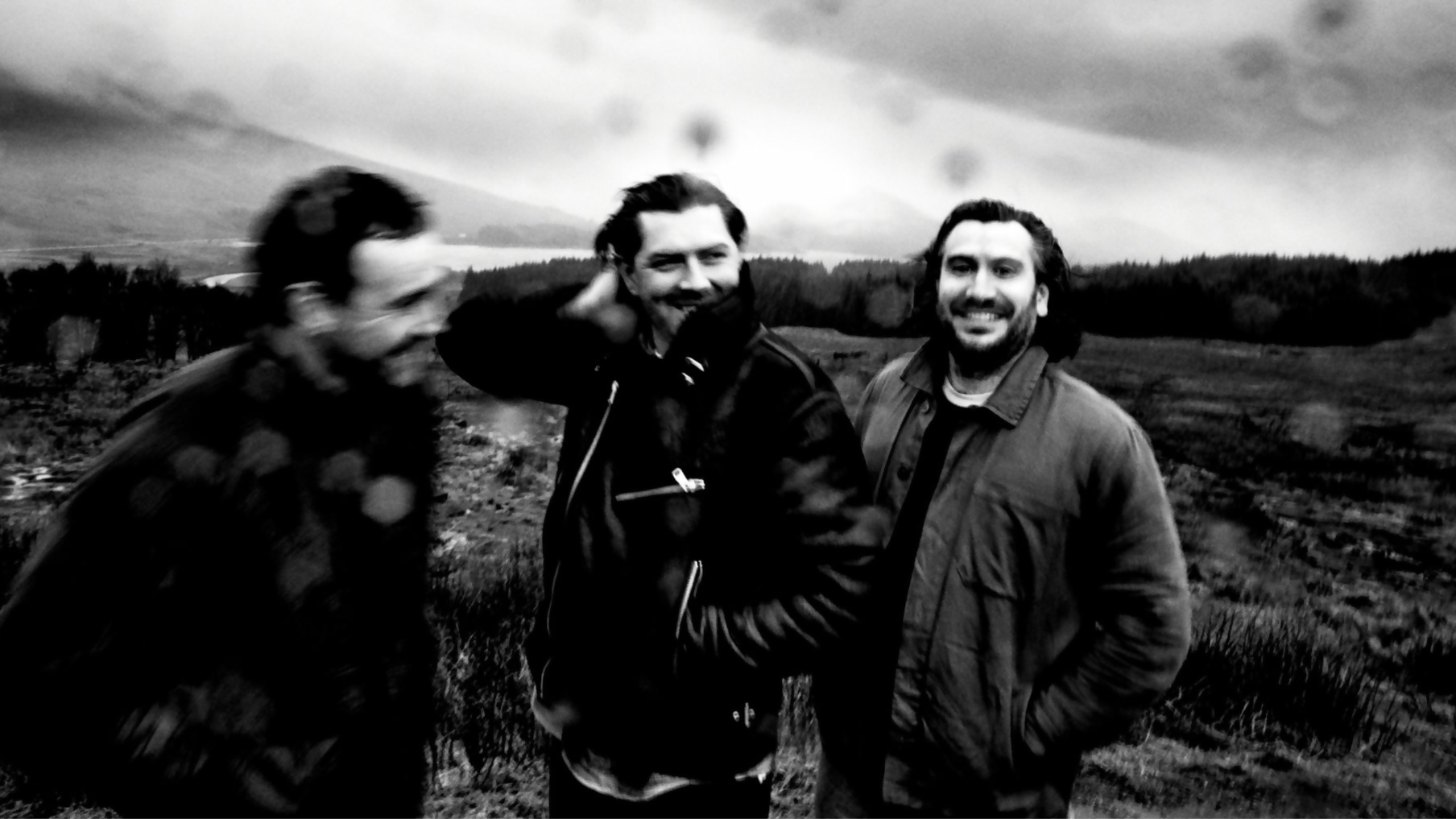
“The photographer that we worked with on this record played into that too. This album is quite heavy on a theme, and that reminded us of making ‘GLA’. Now we’ve got eight records, it’s almost like each album has a parent and child type of pairing. This record’s other half is ‘GLA’. Even though ‘GLA’ is our most ferocious, dirty and angsty record and this one is our most emotional, calm and serene in places, to me they’re partners. We wanted to work with the same photographer who did the shoot for ‘GLA’. That was all cityscape, so we wanted to do the opposite of that. It sounds pretty basic, but to us this was a revelatory moment because we’d never really put ourselves in this Scottish setting. It feels like we’re finally managing to stitch it all together.”
RS: That sense of acceptance seems to extend to the way the band’s operating now too. Craig can come back for a couple of songs and then step away again, and nobody has to turn it into this dramatic, definitive statement about whether somebody is ‘in’ or ‘out’. Does knowing Twin Atlantic can exist in that way make the future feel more comfortable?
SAM: “Yeah, it’s amazing. Honestly, it’s one of the things personally that I’m most proud of. When it’s all said and done – because everything comes to an end eventually – that’ll probably be my first or second thought. I’ll be like, ‘Man, we sidestepped all the drama and the ego showdown.’ Don’t get me wrong, there’s been a lot of that, but we managed to sidestep it and go, ‘Do you know what’s more important than any of that? That we can all fucking live with ourselves after this and not have regrets.’ Life’s more important than our silly band.
“Craig paused when he needed to, rather than when the band needed him to. When it came around to recording, he was meant to do the whole album with us. He came back into the studio, he tried it, and it just wasn’t feeling comfortable for him. It could have played out differently, but having that happen actually made the band stronger and made the album more meaningful. We ended up having one of the best summers we’ve had since 2012 in terms of the experience for all of us personally, playing shows and being together onstage.
“It’s funny, because technically I left the band at the start of this process, didn’t I? Mentally, for the first time since 2000-and-whatever, I stopped. I’d been thinking about this particular band since about 2006, really, and I hadn’t stopped. But for an eight or ten-month window, whatever it was, I had to leave the band to get to this point. Ross had his solo thing that he worked on too, and I just feel like this is how it should work. I don’t know why anyone would choose to do it any other way.
“I used to say that no individual player is bigger than the team. I come from a football background, so that used to be my outlook. If someone was disrupting the dressing room, you just fucking move on. The band is bigger than any of those little dramas, and we’ll always get over it and figure a way out. We’ve managed to adapt that outlook to make sense for all of our needs, and we’ve done that with no interference from anyone else. We’ve just kind of figured it out on our own, which is honestly amazing.”
‘Separation From The Animals’ is out October 02 via Dance To The Radio.